







High Contrast
Font Size
Medium
Small
Medium
Large
ENG
ENG
繁體
简体
About TWC

Undergraduate and Sub-degree Programmes
Postgraduate Programme

Programmes
-
Postgraduate ProgrammeBachelor’s Degree Programmes
-
Sub Degree ProgrammesDiploma Programme
-
Certificate Programme
 Administration Units
 News & EventsThe Centre for Academic and Professional Language Enhancement
 Keynote Speakers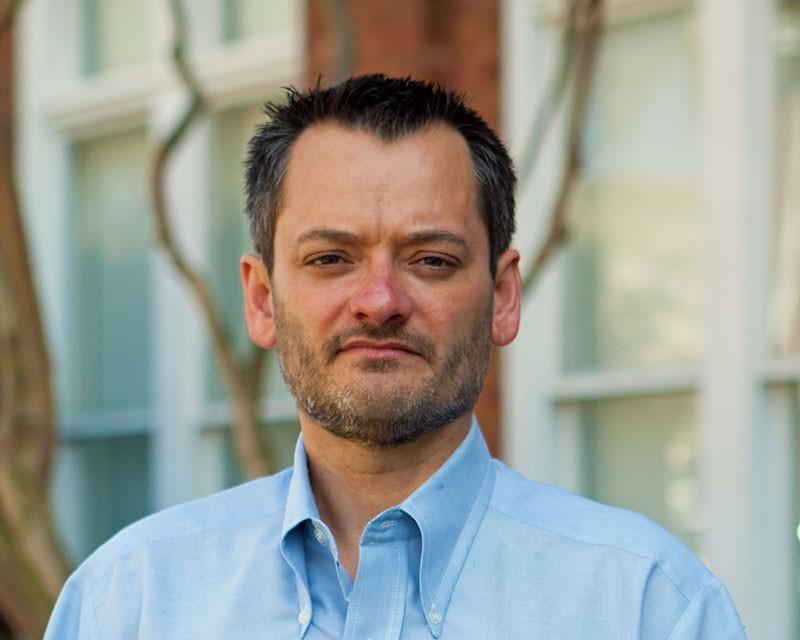
Professor Keith Moser
Professor of French and Francophone Studies, Mississippi State University, USA
Title of the Keynote Speech
The Implementation of Inoculation Theory into the Language Classroom: An Ecolinguistic Tool for Combatting Climate Change Disinformation in the Post-Truth Era
Abstract
In an era marked by climate change denial, digital disinformation, and the proliferation of post-truth narratives, language education has become a critical site of ecological and ethical intervention. Building on recent work in ecolinguistics, environmental humanities, and the philosophy of simulation, this keynote explores how inoculation theory can be implemented in the language classroom as a preventive response to climate change disinformation. Drawing on research from psychology and critical media literacy, I argue that “prebunking” strategies, or exposing learners to weakened forms of misleading narratives, can cultivate cognitive resilience before falsehoods become entrenched. Situating inoculation theory within a broader critique of hyperreality, confirmation bias, and information silos, this investigation demonstrates how language pedagogy can disrupt post-truth ecologies while fostering environmental literacy, ethical responsibility, and critical agency. Ultimately, I position sustainable language education as an essential tool for empowering learners to navigate competing truth claims and engage meaningfully with the planetary crisis.
Speaker's Bio
Keith Moser is Professor of French and Francophone Studies at Mississippi State University and the author of over 150 publications, including nine books. His interdisciplinary research engages biosemiotics, ecolinguistics, environmental ethics, and the environmental humanities, with a particular emphasis on how language, literature, and culture shape ethical responsibility toward human and other-than-human communities. His work explores social-ecological justice, postmodern French thought, and the ethical implications of emerging technologies. In recent years, he has examined artificial intelligence, post-truth culture, and digital disinformation, analyzing how hyperreal environments influence ecological understanding and public discourse. Moser’s scholarship also extends to the Blue Humanities, microbial ethics, and critiques of late-stage capitalism, foregrounding the environmental and ethical consequences of contemporary systems. Across his work, he highlights the vital role of sustainable language education in fostering environmental literacy, critical awareness, and ethical engagement in an increasingly complex and rapidly changing world.
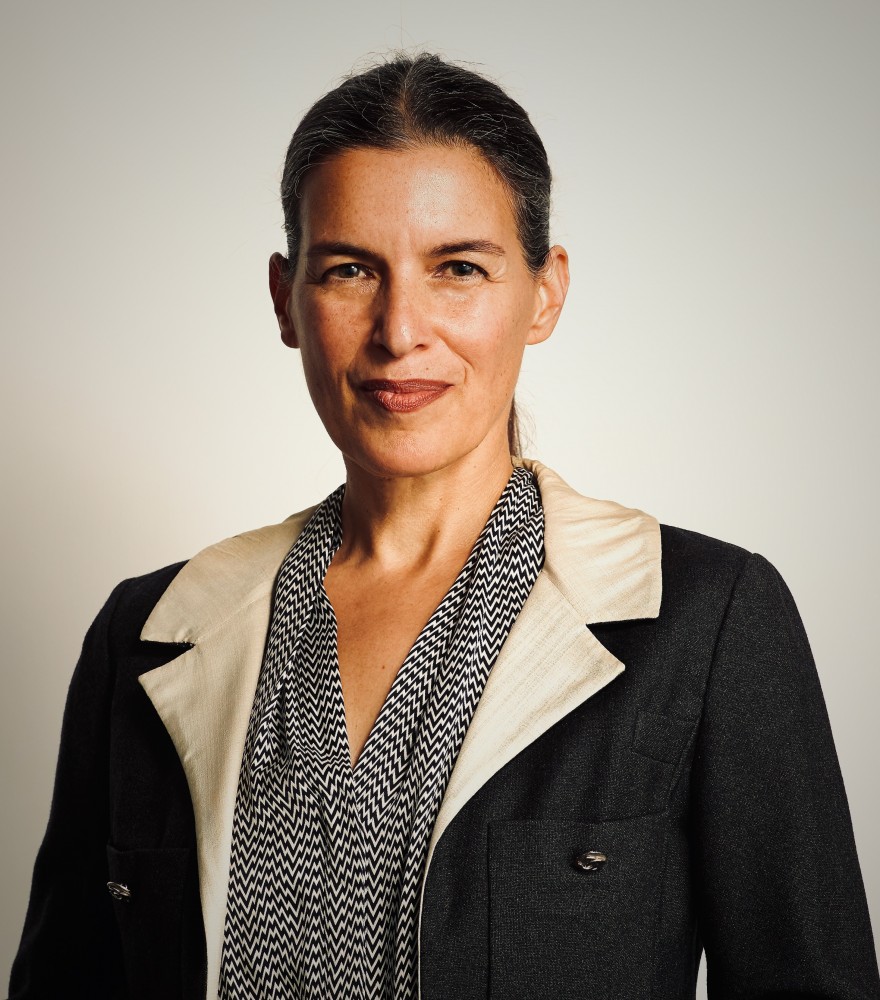
Professor Tema Milstein
Professor of Environment & Society, The University of New South Wales, Australia
Title of the Keynote Speech
Restorative Ecopedagogy: Revealing, Producing, and Transforming Ecocultural Identities
Abstract
Professor of Environment & Society Tema Milstein will introduce the conceptual framework of ecocultural identity in tandem with the inside-out classroom, both of which simultaneously facilitate learning and restorative transformation. Ecocultural identity as a concept teaches learners that all of our sociocultural orientations, including the languages and discourses we speak, shape our ecological relations, and vice versa – from the most ecocentric to the most anthropocentric ways of being. The pedagogical approach of the inside-out classroom breathes life into learning, starting from our students’ ecocultural orientations, passions, and queries and – through students meaningfully engaging our courses’ key concepts – channels learning into intellectual growth and transformative practice in the wider world. Milstein also will introduce (Daily) Delight~Disrupt, a tool we can integrate into our teaching to help students grow from learners to empowered change-makers. (Daily) Delight~Disrupt is an inside-out pedagogy public activation model designed to bring about restorative ecocultural futures at a global scale.
Speaker's Bio
Tema Milstein is Professor of Environment & Society at University of New South Wales (Sydney). She’s an Australian Research Council Future Fellow, a former Fulbright, and recipient of several international research awards, including Outstanding Book Awards (NCA) for Environmental Communication Pedagogy and Practice and Routledge Handbook of Ecocultural Identity (both open access). Her work in the transdisciplinary environmental communication field examines communication as a powerful force at a time of human-generated ecological and climatic crises. She’s particularly known for cultural approaches to studying discourses that go unnoticed, examining ways communication shapes ecological understandings, identities, and action, and illuminating paths toward sustainable, just, and regenerative futures. As Presidential Teaching Fellow at her former institution, she is passionate about pedagogy. Her research spans the globe, illustrating tensions between overarching and marginalized environmental meaning systems, examining subjects including ecotourism and environmental activism, and establishing the study of ecocultural identities.

Professor Stephen Cowley
Professor Emeritus (Culture and Language), University of Southern Denmark, Denmark
Title of the Keynote Speech
Science and Ecoliteracies: Changing the Possible
Abstract
To be confirmed
Speaker's Bio
Stephen Cowley is Professor Emeritus (Culture and Language) at the University of Southern Denmark. He completed his PhD in Linguistics at the University of Cambridge in 1994. He has held positions in Linguistics (Durban), Psychology (Durban, Bradford and Hertfordshire) and Language & Communication (Slagelse, Denmark). Together with Nigel Love, he founded the Distributed Language Group in 2004, which aims to transform the language sciences by tracing what is human to the directed, dialogical activity that shapes the collective dimension of language. In 2012, he co-founded the International Society for the study of Interactivity, Language and Cognition, an international community that holds biennial conferences. He served as President of the Society from 2018 to 2022. His papers span a range of topics that include prosody, developmental psychology, social robotics and what he sees as foundational work on how the bio-ecology shapes language and cognition. These include: (a) Linguistic embodiment and verbal constraints (Frontiers in Psychology, 2015); (b) Bio-ecology and language: a necessary unity (Language Sciences, 2014); (c) Taking a language stance (Ecological Psychology, 2011); and (d) Grounding signs of culture (Mind, Culture and Activity, 2004).

Professor Peter Hourdequin
Professor of Foreign Studies, Tokoha University, Japan
Title of the Keynote Speech
Language, Land, and Literacy: The Ecolinguistics of Place, Practice, and Play
Abstract
To be confirmed
Speaker's Bio
Peter Hourdequin is a Professor in the Faculty of Foreign Studies at Tokoha University, Japan. With over two decades of teaching experience, Profesor Hourdequin has taught a wide range of language and content courses at institutions in Japan and the United States. His research has focused on sustainability in higher education, game-based language teaching, and place-based (language and cultural) learning. He has recently explored using games as a vehicle to connect university students and researchers in conversation about issues of environment and community. Professor Hourdequin has published articles in international refereed journals such as Language & Ecology, The Language Teacher and Journal of International Relations of the Asia-Pacific and has contributed chapters to academic volumes on language education and area studies. Peter has also helped develop several sustainability-focused board and card games to promote environmental awareness and sustainability in his local context.

Professor Arran Stibbe
Professor ofNarrative Ecology, University of Gloucestershire, UK
Title of the Keynote Speech (Online Presentation)
Integrating Sustainability into Green Language Education: Theoretical Insights from Critical Discourse Analysis, Positive Discourse Analysis and Chinese Harmonious Discourse Analysis
Abstract
This session will explore the Stories We Live By approach to language learning. In this approach, students analyse texts to reveal the underlying stories that they convey and then judge these stories according to their own values system or ecosophy – deciding whether the stories encourage people to protect or destroy the ecosystems that life depends on. The stories include destructive global stories from industrial societies that are responsible for ecological destruction (e.g., seeing nature as a resource to be exploited) and stories from traditional cultures that encourage people to care and protect the ecosystems that life depends on. The talk will present a framework for teaching based on ecolinguistics, Critical Discourse Analysis and Harmonius Discourse Analysis, and illustrate it with examples from a wide range of discourses.
Speaker's Bio
Arran Stibbe is Professor of Narrative Ecology at the University of Gloucestershire. He is author of Econarrative: ethics, ecology and the search for new narratives to live by (Bloomsbury) and Ecolinguistics: language, ecology and the stories we live by (Routledge). He has acted as a consultant for the European Commission, Greenpeace and a range of corporations and environmental advocacy groups on topics from environmental communication to ethical leadership. His free online courses are available at www.storiescourse.org.
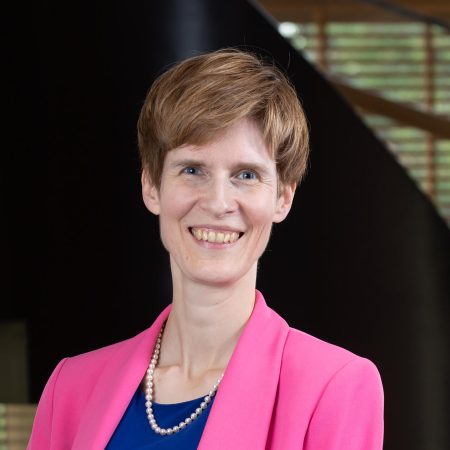
Professor Karen Thornber
President of Phi Beta Kappa Alpha Iota of Massachusetts; Richard L. Menschel Faculty Director of Derek Bok Center for Teaching and Learning; Harry Tuchman Levin Professor in Literature; Professor of East Asian Languages and Civilizations, Harvard University, USA
Title of the Keynote Speech (Online Presentation)
Integrating Environmental Health into Language Teaching and Learning
Abstract
This talk explores frameworks and classroom strategies for embedding environmental health literacy within language teaching and learning at all levels. With climate change, biodiversity loss, and ecological degradation impacting human and nonhuman health alike, language educators and their classrooms are uniquely positioned to develop cross-cultural ecological health awareness. Taking as a given that environment and health are inseparable - with degraded landscapes both an ecological concern and a direct determinant of community wellbeing - this presentation reveals how engagement with authentic texts such as multimodal community health narratives, activist discourses, and environmental policy documents can build vocabulary, critical literacy, and an understanding of how language constructs our relationship with both the natural world and ourselves. Culturally responsive approaches that honor diverse relationships are foregrounded throughout, and specific examples and practical tools for course design and assessment will be provided. I will also offer a broader vision of language education as a crucial site of ecological citizenship and health advocacy.
Speaker's Bio
Karen Thornber is Harry Tuchman Levin Professor in Literature, Professor of East Asian Languages and Civilizations, and Harvard College Professor at Harvard University, where she is also the Richard L. Menschel Faculty Director of the Derek Bok Center for Teaching and Learning. Professor Thornber is a cultural historian and scholar of Asian literature and media working primarily in the fields of environmental humanities; medical and health humanities; gender justice, environmental justice, climate justice; and transculturation, including translation.
Her books include Gender Justice and Contemporary Asian Literatures (2024) and Global Healing: Literature, Advocacy, Care (2020), as well as Ecoambiguity: Environmental Crises and East Asian Literatures (2012) and Empire of Texts in Motion: Chinese, Japanese, Korean, and Taiwanese Transculturations of Japanese Literature (2009). Professor Thornber is currently working on two books: Futures of Literary Criticism and Narrating (Environ)mental Distress: Stories of Ecological Degradation, Mental Illness, and Inequality. She is also an award-winning translator of Japanese literature.
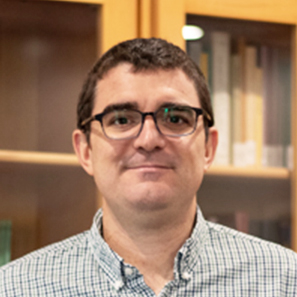
Dr Robert Poole
Associate Professor of TESOL, The University of Alabama, USA
Title of the Keynote Speech (Online Presentation)
Eco-Critical Language Awareness for English Language Teaching and Learning
Abstract
This keynote explores the integration of ecolinguistics within the English Language Teaching classroom to support pedagogies of sustainability that cultivate greater ecological awareness in language learners through developing critical literacies of ecological importance. This talk briefly surveys research focused upon identifying and challenging destructive discourses in language learning materials as well as research that applies ecolinguistic principles and practices into the language learning classroom. I then articulate how Critical Language Awareness, an approach which seeks to promote social justice by explicitly calling attention to power issues in the context of literacy development and language instruction, must be extended to concerns of ecological wellbeing and sustainability. To do so, I present five principles for developing Eco-Critical Language Awareness and argue that sustainability must be more prominently the focus of English language teaching classrooms in this era of climate crisis.This keynote explores the integration of ecolinguistics within the English Language Teaching classroom to support pedagogies of sustainability that cultivate greater ecological awareness in language learners through developing critical literacies of ecological importance. This talk briefly surveys research focused upon identifying and challenging destructive discourses in language learning materials as well as research that applies ecolinguistic principles and practices into the language learning classroom. I then articulate how Critical Language Awareness, an approach which seeks to promote social justice by explicitly calling attention to power issues in the context of literacy development and language instruction, must be extended to concerns of ecological wellbeing and sustainability. To do so, I present five principles for developing Eco-Critical Language Awareness and argue that sustainability must be more prominently the focus of English language teaching classrooms in this era of climate crisis.
Speaker's Bio
Dr Robert Pooleis Associate Professor of TESOL and Applied Linguistics at the University of Alabama, USA. His interests in ecological wellbeing and sustainability are advanced in his research in ecolinguistics, corpus-assisted discourse studies, and English language teaching and learning. His books include A Guide to Using Corpora for English Language Learners (2018), Corpus-Assisted Ecolinguistics (2022), and Environment through Time: Diachronic Studies in Ecolinguistics (forthcoming). He is also the lead editor of The Bloomsbury Handbook of Ecolinguistics (forthcoming). As evident in his in-press monograph and journal publications, Robert’s current research agenda focuses upon diachronic change in discourses of ecological relevance through the application of methods from corpus-assisted discourse studies in addition to his interests in exploring how ecolinguistics can contribute meaningfully to English language teaching and learning.
NEWS & EVENTSQUICK LINKSQUICK LINKS King’s Park CampusMa Kam Chan Memorial Building,
31 Wylie Road, Homantin, Hong KongMongkok CampusCheung Kung Hai Memorial Building, 90A,
and Cheung Chin Lan Hong Building, 98,
Shantung Street, Mongkok, Hong KongKwai Hing Campus8/F, Tower 1 and
16/F, Tower 2,
Kowloon Commerce Centre,
51 Kwai Cheong Road,
Kwai Chung, Hong KongTsim Sha Tsui Campus136A, Nathan Road,
Kowloon, Hong KongGeneral Enquiries:Admission Enquiries:



 ©2026 Tung Wah College Limited. All Rights Reserved.