



Tung Wah College and Hong Kong Shue Yan University Announce Research Findings on the Effectiveness of a School-Based Mental Health Training Programme: The Transformative, Resilient, Youth-Led (TRY) Gym
18/05/2026
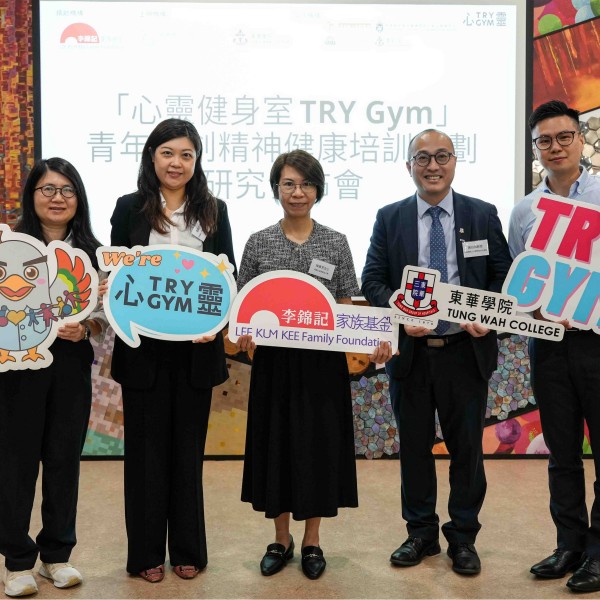
A pioneering school-based mental health training programme: “The Transformative, Resilient, Youth-led (TRY) Gym”, was launched in September 2023 by a joint research team from Tung Wah College (TWC) and Hong Kong Shue Yan University (HKSYU). This two-year initiative aims to enhance adolescents’ awareness of mental health and self-care at both school and community levels.
Supported by a generous donation from the Lee Kum Kee Family Foundation, the research team partnered with four organisations: St. James' Settlement Youth Service, Tung Wah Group of Hospitals School Social Work Service, Hong Kong Sheng Kung Hui Kowloon City Children and Youth Integrated Service Centre, and Hong Kong Children & Youth Services Jockey Club Tin Ping Integrated Children & Youth Services Centre.
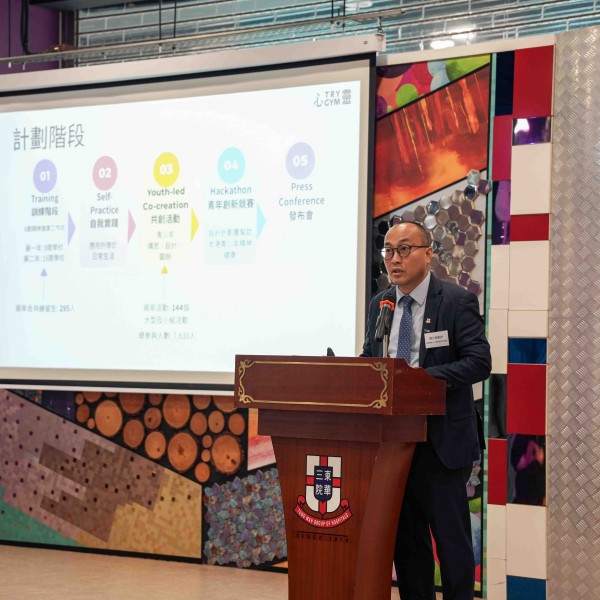
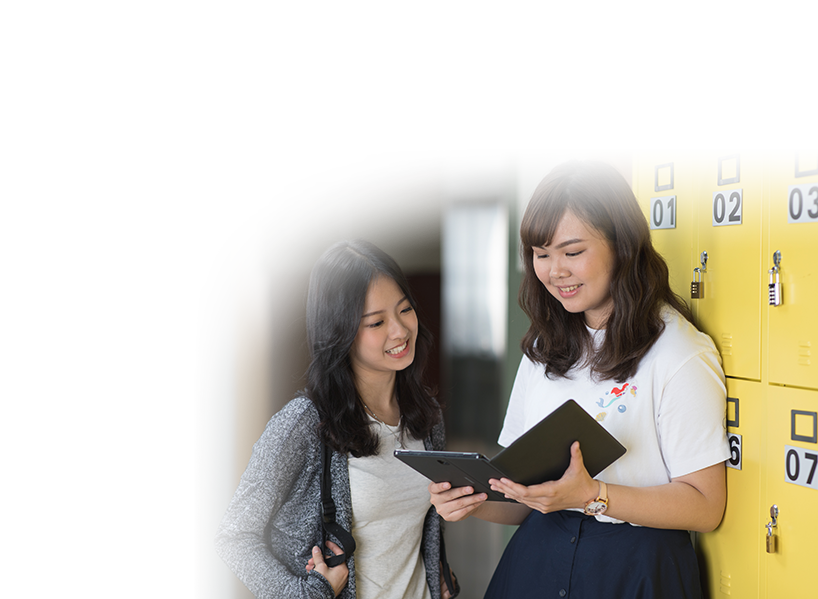
A total of 295 Form 4 students were trained as youth mentors (trainees) through eight mental health workshop sessions, equipping them to address challenges, practise self-care, and develop counselling and listening skills. The trainees also identified their personal strengths, learned to access community resources, nurtured positive interpersonal relationships, and developed a stronger sense of social belonging — promoting holistic youth development across physical, mental, social and spiritual dimensions. They also organised school- and community-based booth activities, including art- and sports-based events, to raise the visibility of mental health. Research findings demonstrate notable improvement in the trainees’ mental health and well-being after completing the programme.
Move beyond conventional top-down approaches and delayed interventions by adopting youth-led mental health support
Professor Alex Chan, Dean of the School of Arts and Humanities at TWC, said, “The programme departs from traditional top-down approaches by adopting a bottom-up, co-creative model led by adolescents under professional supervision, fostering engagement at both school and community levels. The programme emphasises identifying young people’s strengths and resilience to support positive growth and transformation.”
Dr. Raymond Chui, Associate Professor of the Department of Social Work at HKSYU, added, “Generation Z are increasingly turning to AI for support with depression and anxiety, often delaying professional help. In response, the programme provides a stigma-free platform that highlights personal strengths and uses multimedia resources to improve mental health literacy and encourage timely help-seeking.”
Proven Impact in Enhancing Youth Mental Health and Positive Development
Over the two-year period, 295 Form 4 students, aged 15-18, from 16 secondary schools were trained as trainees. After completing eight mental health workshops, they teamed up to design and deliver three co-creative mental health activities on campuses and in the community. Altogether, the trainees organised 144 events, reaching 7,630 participants and disseminating mental health messages to both peers and the public.
To evaluate the programme’s effectiveness, the research team adopted both quantitative and qualitative methods. Quantitatively, participants' mental health and positive development were assessed using 12 scales via questionnaires at pre-training, post-training, and post-implementation phases, with 243 responses collected. Qualitatively, 44 trainees participated in focus groups or interviews at the pre-training and post-implementation phases.
The analysis showed improvements across all 12 scales, with 10 reaching statistical significance: social competence, emotional competence, cognitive competence, self-efficacy competence, resilience, sense of mastery, perceived devaluation-discrimination, mental well-being, self-compassion, and awareness of personal strength. Mental help seeking attitude and motivational competence (action-taking ability) also improved, although the changes were not statistically significant.
Interviews revealed that the trainees noticed broad improvements in emotional regulation, self-care, empathy, social skills, teamwork, communication, stress management, and self-identity. Overall, the programme substantially enhanced adolescents’ mental health and positive development.
Youth-led Positive Education with Home-School-Community Collaboration to Build a Stigma-free community
In light of the encouraging results, the research team will expand the programme and train more trainees to strengthen sustainable peer support. The team recommends placing youth perspectives at the centre of activity design, tailoring activities to participants’ needs, and further enhancing young people’s autonomy. Schools are also encouraged to strengthen positive life education, identify students’ strengths, deepen peer support and home-school-community collaboration, and empower students to help build a stigma-free mental health support network. In summary, youth leadership, positive education, and home-school-community collaboration will advance adolescent mental health and strengthen mutual support within the community.
Research team members included:
Dr. Raymond Chui, Associate Professor, Department of Social Work, HKSYU
Professor Alex Chan, Dean of the School of Arts and Humanities, TWC
Dr. Winnie Yuen, Associate Professor, Department of Counselling and Psychology, HKSYU
Dr. Josephine Fung, Senior Lecturer, Department of Social Work, HKSYU
Ms. Cheung Ying Chiu, Project Officer, Department of Social Work, HKSYU
Mr. Felix Fan, Project Officer, School of Arts and Humanities, TWC
Ms. Beryl Fok, Project Officer, School of Arts and Humanities, TWC
Ms. Sally Siu, Research Assistant, School of Arts and Humanities, TWC